
What Are Traditional Wedding Vows?
Summary
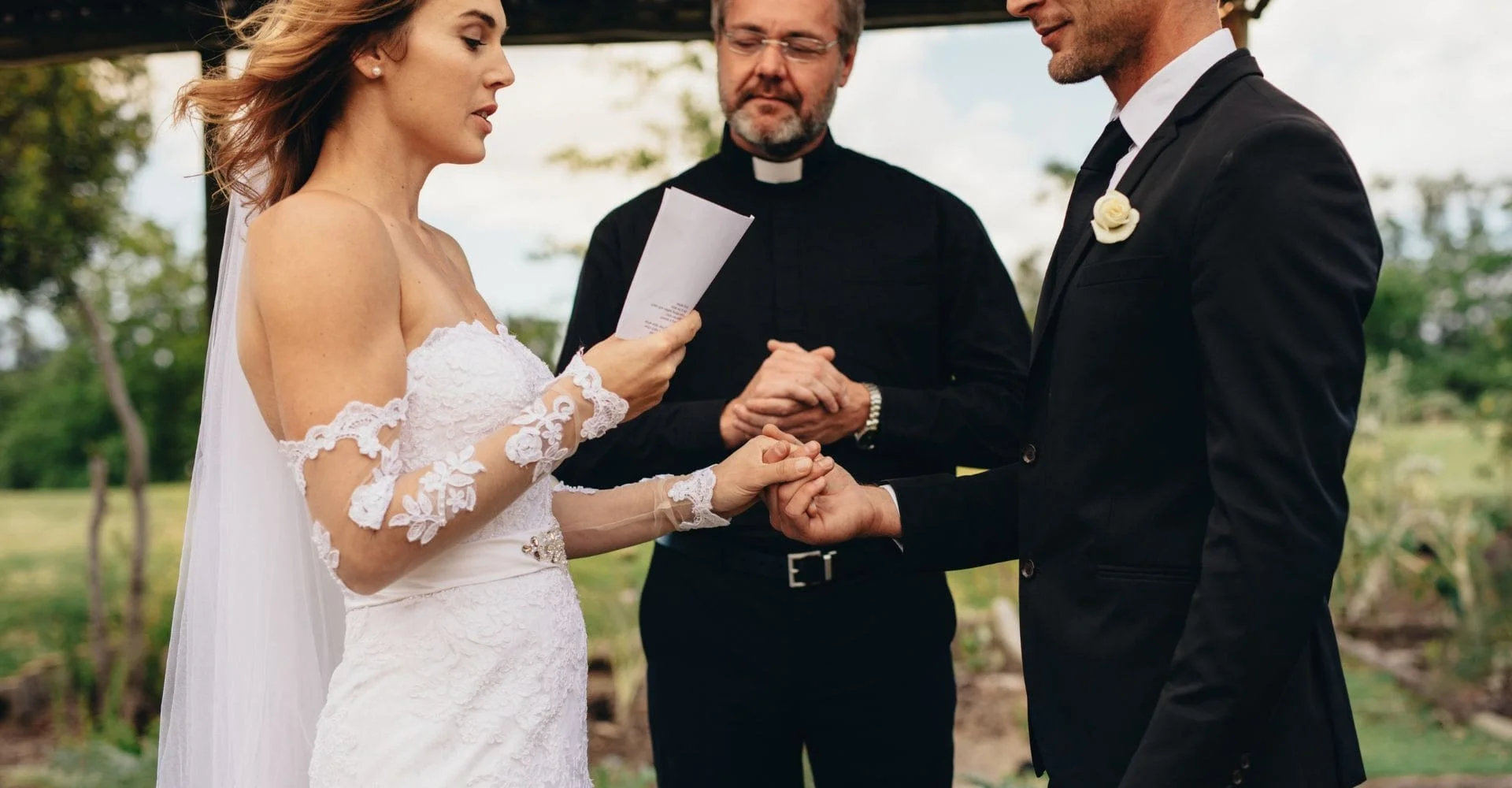
Traditional wedding vows are time-honored promises exchanged during the wedding ceremony, expressing lifelong commitment, love, and support between partners. These vows are often rooted in cultural, religious, or historical traditions, and many couples choose them for their familiarity, elegance, and heartfelt meaning.
Traditional wedding vows offer a meaningful way for couples to honor long-standing customs during their ceremony. They capture the essence of devotion and reflect the deep emotional commitment two people share. Whether religious or secular, these vows provide structure and sentiment that many couples find comforting. Understanding their purpose and variations can help you choose the wording that feels most authentic to your relationship.
Understanding Traditional Wedding Vows
Traditional wedding vows are standardized statements that reflect widely recognized expressions of commitment. They often include promises such as honoring, cherishing, and supporting each other throughout life’s journey. These vows remain popular because they blend timeless language with emotional depth, offering a familiar foundation for the ceremony.
Many religious traditions have their own versions of vows, from Christian denominations to Jewish, Hindu, and other cultural practices. Secular couples may also choose traditional vows because they provide clarity, simplicity, and a widely understood format. Using these vows is a straightforward way to honor tradition while keeping the ceremony elegant and meaningful.
Ultimately, traditional vows serve as both a declaration of intent and a public promise witnessed by loved ones. They reflect values like loyalty, partnership, and enduring love, principles that resonate across generations and cultures.
Examples of Common Traditional Vows
Common vows used in weddings today often follow recognizable patterns that emphasize lifelong commitment. These well-known lines are cherished for their simplicity, beauty, and emotional resonance. Reviewing examples can help couples decide whether they want to use them as is or personalize them for a more unique expression.
Here are examples of frequently used traditional vows:
“I, [Name], take you, [Name], to be my lawfully wedded spouse…”
“To have and to hold from this day forward…”
“For better, for worse, for richer, for poorer…”
“In sickness and in health, to love and to cherish…”
Additional adaptations exist across cultures and ceremonies. Some include references to spirituality or family, while others focus solely on the bond between the partners. Couples can also blend traditional lines with personal wording to create a balance of heritage and individuality.
Whether spoken verbatim or adapted, these vows help anchor the ceremony with words that countless couples have used to express their commitment.
Traditional Wedding Vows Across Cultures
Traditional wedding vows vary significantly across cultures, each offering its own distinctive themes and ceremonial language. These vows often reflect spiritual beliefs, cultural values, and long-standing traditions. Exploring different types of vows can provide inspiration for couples seeking something unique yet meaningful.
Below is a table highlighting examples of traditional vows from various cultural or religious backgrounds
| Tradition | Key Elements of the Vows |
|---|---|
| Christian (Protestant) | Promises of love, honor, and lifelong commitment; often includes “forsaking all others.” |
| Catholic | Focus on unity, faith, and permanence of marriage; includes “I will love you and honor you all the days of my life.” |
| Jewish | Centered around partnership and covenant; often accompanied by the exchange of rings and the phrase “Behold, you are consecrated to me.” |
| Hindu | Seven sacred vows (Saptapadi) symbolizing nourishment, strength, prosperity, happiness, progeny, harmony, and companionship. |
| Secular | Focus on equality, respect, and emotional partnership without religious language. |
How to Choose Your Style of Vows
Choosing the right style of wedding vows is a deeply personal decision that should reflect your values and relationship. Many couples start by exploring traditional vows to determine whether they resonate emotionally and stylistically. From there, they may choose to use the vows as written, personalize them, or blend them with custom wording.
Consider your ceremony type, whether it’s religious, secular, formal, or relaxed. Some venues or officiants require specific vows, especially in religious settings, while others allow complete freedom. Understanding these guidelines early in the planning process can help eliminate stress and ensure your ceremony flows smoothly.
Most importantly, select vows that feel authentic to you and your partner. Whether traditional or customized, the words you speak should reflect your love, your commitment, and the life you want to build together.
We’d love to help you plan your wedding day at Historic Acres of Hershey. Our beautiful property boasts multiple spaces to accommodate different styles of gatherings. Give us a call at 717-298-6340 to learn more or contact us.
Frequently Asked Questions
1. What makes wedding vows “traditional”?
Traditional vows follow long-standing scripts used across many ceremonies, often rooted in religious or cultural heritage.
2. Can we modify traditional wedding vows?
Yes, many couples personalize traditional vows as long as their officiant or religious institution permits it.
3. Do we have to memorize our vows?
Not necessarily, most officiants guide couples through the lines or provide printed versions to read.
4. Are traditional vows religious?
Many are, but secular traditional vows also exist and can be used in non-religious ceremonies.
5. How long should our vows be?
Traditional vows are typically brief, usually around 20–30 seconds when spoken aloud.
